Can physical activity support children’s emotional regulation?
Martin’s Level 5 Foundation Degree research explored how structured physical activity could support children’s emotional wellbeing, leading to a six-week Run Club focused on confidence, relationships and personal achievement. The project shows how practice-based learning can turn everyday observations into meaningful experiences for children.
.png)
It’s common for parents, carers and teachers to ask, “can physical activity support children’s emotional regulation?”
For Martin, a Therapeutic Childcare Practitioner at Mulberry Bush Standlake, this question became the focus of research completed through our Level 5 Foundation Degree in Therapeutic Work with Children and Young People, inspired by what he was observing in his everyday practice.
Some children could find emotional regulation particularly difficult during transitions and in the evenings, sometimes experiencing high levels of physical energy, anxiety and restlessness.
Could structured physical activity provide another way of supporting children’s emotional wellbeing?
The short answer is yes.
Physical activity can offer more than an opportunity to exercise. Structure, achievable goals, positive relationships and a way to manage physical energy can all become part of the experience.
Martin’s research explored the impact of a structured running club on children’s emotional regulation, behaviour, sleep and wider wellbeing.
From that research came a practical idea: a six-week programme called Road to Junior Parkrun.
Week by week, the programme gradually developed the children’s running distance and confidence, with the goal of completing a 2km Junior Parkrun.
But the project was never simply about running.
“Rather than focusing purely on fitness or competition, I wanted the sessions to provide structure, consistency, positive relationships and achievable goals.”
Why personal achievement was more important than competition?
One of Martin's key reflections was the importance of focusing on each child's individual progress.
Competition could be difficult for some children, so the Run Club was designed around personal achievement rather than winning.
Children were encouraged to recognise their own effort, progress and willingness to challenge themselves.
This meant completing a longer distance, taking part consistently or attempting something that had previously felt difficult could all become meaningful achievements.
What impact did the Run Club have?
Across the six weeks, Martin saw children develop confidence and motivation, alongside a growing willingness to challenge themselves.
Staff also reported that some children appeared more settled following the sessions and during evening routines.
The programme culminated in the children completing a 2km Junior Parkrun.
For Martin, reaching the finish line represented much more than completing a physical challenge.
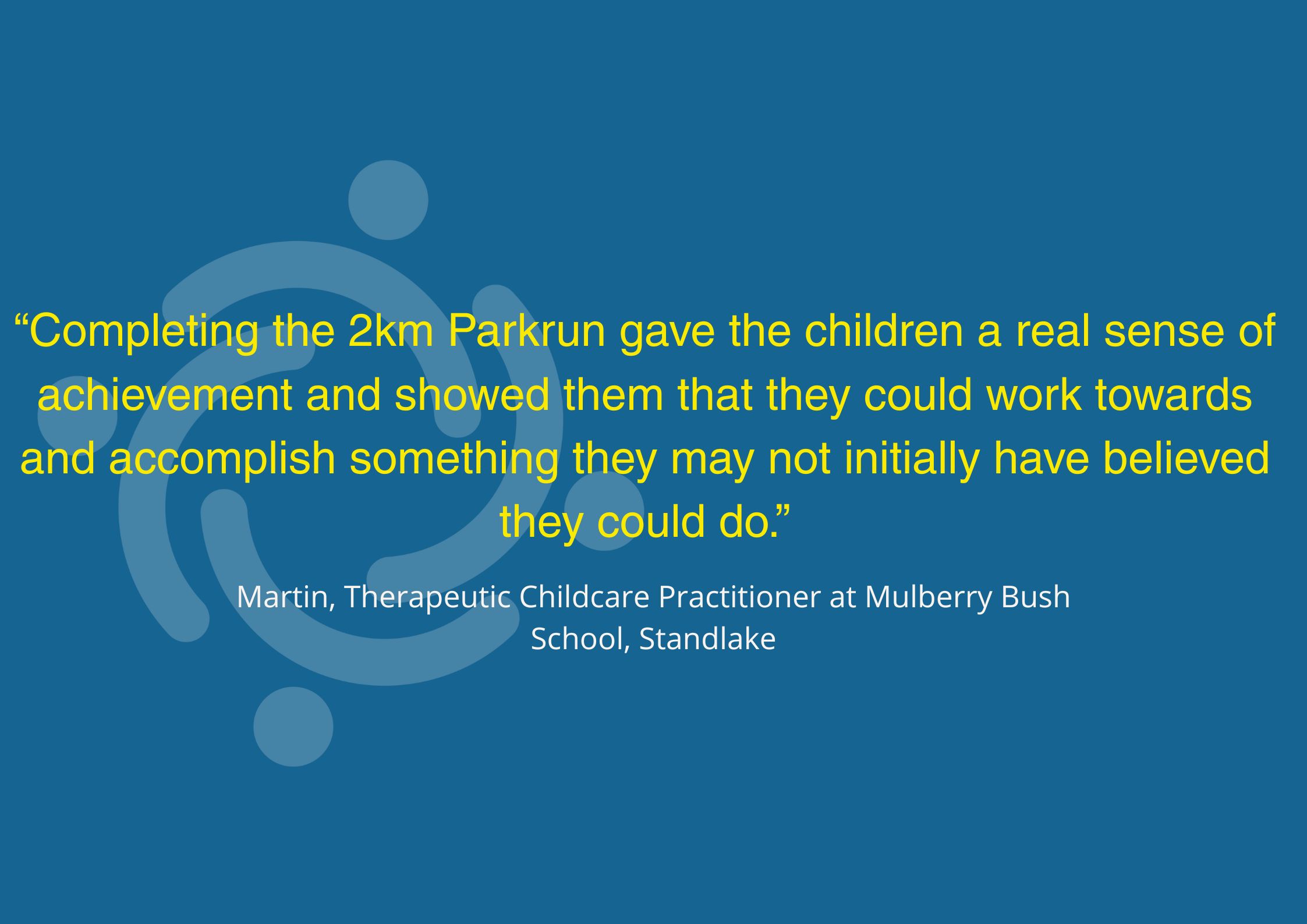
The project reinforced for Martin that physical activity can form one part of a much wider approach to supporting children's emotional wellbeing.
In Martin’s words:
.jpg)
How did the FdA research influence everyday practice?
Martin's project demonstrates what practice-based professional development can look like.
Our Level 5 Foundation Degree in Therapeutic Work with Children and Young People gives practitioners opportunities to connect academic learning with the realities of their everyday work.
Practitioners are encouraged to observe, reflect, question and explore how their practice can continue to develop.
For Martin, the process was clear:
An observation became a research question.
The research informed a practical programme.
The programme created new experiences for children.
Those experiences generated further learning and reflection.
It shows why professional development does not only have an impact on the person studying.
When learning is connected closely to practice, it can influence the everyday environments, relationships and opportunities we create for the children and young people alongside us.
We are also proud to announce that Martin’s work has been shortlisted for the Children’s Homes Association Community Engagement Award, recognising the project’s contribution to creating positive, meaningful experiences for children through physical activity and community participation.
FAQ:
What did Martin learn from the project?
Martin's experience reinforced the potential value of structured physical activity as one element of supporting children's emotional wellbeing. He also identified the importance of structure, consistency, relationships and achievable personal goals.
What is practice-based learning?
Practice-based learning connects academic knowledge with real experiences from someone's professional role. Rather than considering theory in isolation, practitioners can use observation, reflection and research to explore questions arising from their everyday work.
Why did the programme focus on personal achievement?
Martin found that competition could be difficult for some children. The programme therefore focused on individual progress, achievable goals and each child's willingness to challenge themselves rather than comparing their performance with others.
What is the Level 5 Foundation Degree in Therapeutic Work with Children and Young People?
Mulberry Bush's award-winning Foundation Degree supports professionals working with children and young people to deepen their understanding of therapeutic practice and connect academic learning with their everyday work.