Global Inclusive Schools Forum, Paris, 14th & 15th March 2024
Read all about Polly's time at the Global Inclusive Schools Forum in Paris, what her key takeaways were and how we can do more to be inclusive.
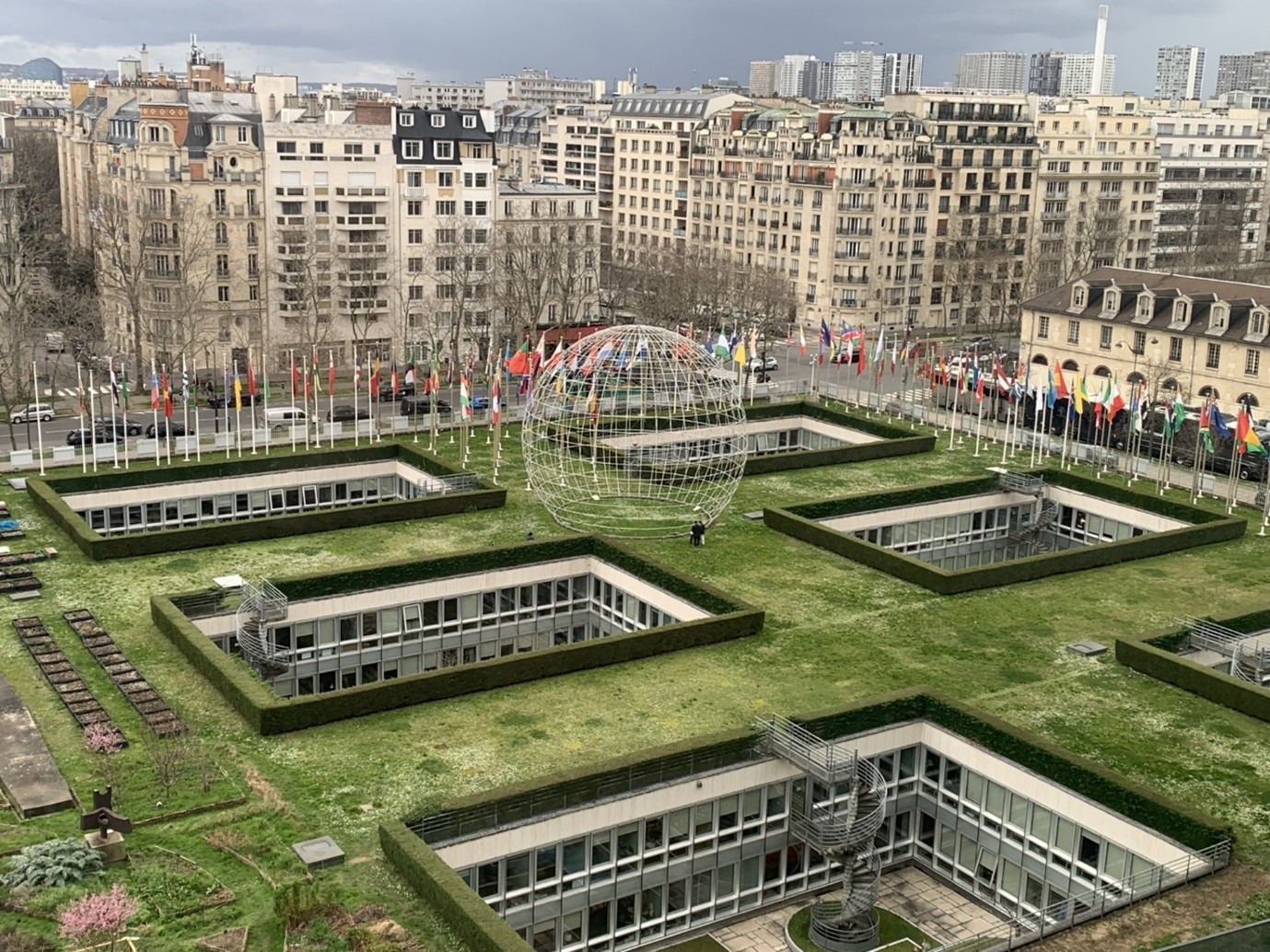
Polly Cheswick recently represented The Mulberry Bush at the Global Inclusive Schools Forum co-hosted by the International Forum of Inclusive Practitioners (IFIP) & UNESCO. Her thoughts and reflections are below:
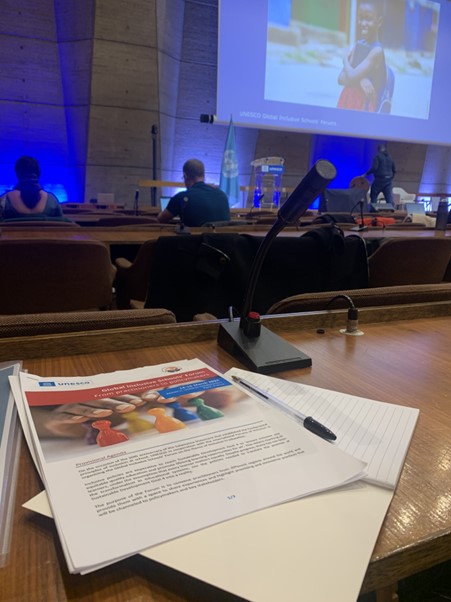
The purpose of the forum was to convene practitioners and provide a space to share experiences and highlight best practice from across the globe. The forum was made up of think tanks, panel discussions, opportunities to network and an interactive Global Inclusion Village. Discussions were held in English, French and Spanish with live translation into 3 languages and closed captions used to ensure accessibility for all.
The event was opened by Min Jeong Kim (Director for Division of Education at UNESCO) and Daniel Sobel (Inclusion Expert from the International Forum of Inclusive Practitioners) who set the scene for the forum.
On the first day, panel discussions were held around supporting teachers and school personnel with inclusive teaching and practice. Delegates pondered different definitions of inclusion and thought about the global picture for children's education in 2024. I was surprised to hear that globally there are 250 million children out of school and that only 1/6 of young people are able to access secondary education. The panellists highlighted that more needs to be done to support teachers during initial teaching training and as a part of continuous professional development (CPD).
"Globally, 250 million children are out of education"
The next panel discussion focused on building safe, welcoming, and inclusive learning environments. One of the panellists (Mr Rú Ávila Rodríguez) shared that from his research, 90% of young people who identify as LGBTQIA+ experience insults in school. Further research was shared which stated that children who learn in places where priority is given to wellbeing and gender equality do better academically.
The last part of the day involved smaller group discussions focused on exploring scalable initiatives that actively involve parents/carers and the community in the inclusive education process. One particular example from an executive headteacher was the creation of a "parent/carer café" on site which she spends part of her working week in to ensure that parents/carers are able to speak to her if needed and network with other parents/carers to develop connections in the local area.
"Inclusion needs to be at the heart of the school – not a room at the end of a corridor"
Day two involved two panel discussions, exploration of the Global Inclusion Village and participation in a Think Tank.
The first panel discussion was around ensuring access to assistive technologies and inclusive ICTs. One of the panellists (Ms Betelhem Dessie) shared that her organisation had created a classroom in a shipping container to teach those in rural areas of Ethiopia how to code so that they could access jobs in the digital market. The company (iCOg – Anyone Can Code) has now taught over 30,000 students in a range of languages.
The second panel focused on the transition from school to the labour market. Panellists from Senegal, Israel, The Philippines and Benin shared initiatives from their countries. Richard Ingram, a researcher from the University of Exeter, closed the panel and shared his reflection that our current education systems appear to breed competition and remarked "Education can save the world, but we need to save education first".
I then attended a Think Tank focusing on Parent Advocacy for Inclusion, followed by exploring the Global Inclusion Village, reading about educational statistics from across the globe and case studies.
My key takeaways from the event:
- How can we support teachers in training and qualified teachers (through continuous professional development) to further their knowledge of inclusion and inclusive practice?
- How can we encourage all stakeholders to be a part of inclusive environments?
- There was no single definition of inclusion shared during the forum, which suggests different people have different ways of viewing and understanding inclusion.
- Inclusion is very much a process, not an end point. It's an evolving process and something we need to ensure is at the heart of what we do, always.